Diamond certification · Paul Bram, Melbourne
Check a GIA diamond report.
Your report number links the diamond to an independent record held by GIA. Look it up here, then learn how to read what it says — and how to be certain the paperwork belongs to your stone.
Free · Takes about a minute
Look up your report number
Printed at the top of the report, and laser-inscribed on the girdle of most GIA-graded diamonds.
GIA Report Check is a free service run by the Gemological Institute of America. Paul Bram is an independent retailer, not affiliated with GIA, and cannot verify a report on your behalf — GIA’s own database is the only authority. gia.edu
The lookup
How to check a GIA report.
Free, about a minute, no account. What matters is what you do with the result.
Find the report number
Printed at the top of the report, and laser-inscribed on the girdle of most GIA-graded diamonds. Enter the digits only — spaces and hyphens are formatting.
Enter it at GIA
Go to gia.edu directly rather than following a link in a listing or an email. GIA returns the data it holds, and for most modern reports a facsimile of the document.
Compare, line by line
Shape, measurements, weight, colour, clarity, cut, polish, symmetry, fluorescence and inscription should all match. A single altered grade is the commonest tampering.
Match it to the stone
The step almost everyone skips. A genuine report proves a diamond exists — not that it is this one. Here is how to close that gap.
What GIA shows you depends on how old the report is
Thresholds published by GIA. Reports issued before 2000 are not held in Report Check — that does not mean they are not genuine, it means the lookup cannot confirm them and the stone should be assessed in person.
Anatomy
What is actually on a GIA report.
Select any line to see what it means and what a careful buyer looks for. A schematic, not a reproduction.
Identification
Grading Results
Additional Grading Information
Reference
Line 1 of 14
GIA Report Number

Natural or laboratory-grown
The two look identical. The paperwork is where it is stated.
Both carry the same colour and clarity terms, so the grades alone will never tell you. The heading at the top of the report and the inscription on the girdle will.
A natural diamond
GIA Diamond Grading Report
- Headed Diamond Grading Report or Diamond Dossier.
- Colour D–Z, clarity FL–I3.
- Girdle inscribed GIA plus the report number.
- No growth method stated, because there is none.
A laboratory-grown diamond
GIA Laboratory-Grown Diamond Report
- Headed Laboratory-Grown Diamond Report.
- The same colour and clarity terms.
- Girdle inscribed “Laboratory-Grown”.
- The growth method and any treatment disclosed.
Report types
Which one are you holding?
GIA issues several, and they are not interchangeable. Knowing which you have tells you what it should contain.
Reading the grades
The 4Cs, as they appear on the report.
Four scales, one document. Knowing where your stone sits on each is the difference between owning a diamond and understanding one.
Colour: D to Z
It measures how little colour a diamond has, not how much. D is colourless; by Z the stone shows a light yellow or brown. GIA grades face-down against master stones in controlled light, because the steps are that subtle.
Worth knowing. The scale stops at Z. A diamond with more colour than that, or a colour other than yellow or brown, is not graded here at all — it goes on a Coloured Diamond Grading Report, where stronger colour means a rarer stone.
 Beyond the D–Z scaleArgyle Diamond Jewellery CollectionExplore ›
Clarity: Flawless to I3
The inclusions inside a diamond and the blemishes on its surface, judged by a trained grader at ten times magnification. Almost every natural diamond has some — they are the record of how it formed.
Worth knowing. Clarity is not the same as what you can see. Two VS1 stones can look quite different depending on where the inclusions sit. The plotted diagram on a full report is what tells you where — a Dossier does not carry one.
 Hand-selected for eye-cleanDiamond Engagement RingsExplore ›
Cut: Excellent to Poor
The only one of the four decided by a person rather than by geology, and the one that decides how a diamond behaves in the light. A poorly cut stone of high colour and clarity will look duller than a well cut stone two grades below it.
Worth knowing. GIA assigns an overall cut grade to standard round brilliants only. An oval, emerald, pear or cushion carries polish and symmetry but no cut grade — not an oversight, simply no single standard for those shapes. Every Paul Bram round brilliant is selected at Excellent.
 Excellent cut, every timeRound Brilliant Cut Diamond Engagement RingsExplore ›
Carat: weight, not size
One carat is a fifth of a gram. GIA records weight to two decimal places and does not round up, which is why a report reads 0.99 when that is what the scale says. What you see across the top of the stone is the spread, and that is governed by the cut.
Worth knowing. Weight can be hidden. A stone cut deep carries carats where nobody sees them; cut shallow it spreads wide but loses light. Read carat beside the millimetre measurements and the cut grade to tell which you are holding.
 Where the centre stone leadsSolitaire Engagement RingsExplore ›
The inscription
Matching the report to the stone.
A verified report proves a diamond with those characteristics was graded by GIA. It does not prove it is the diamond in front of you. Reports and stones get separated, innocently or otherwise, and a report that checks out perfectly against a different stone is the oldest problem in the trade.
The link between the two is the inscription. On most GIA-graded diamonds the report number is laser-inscribed on the girdle — the thin band around the widest part of the stone. Invisible to the naked eye, permanent, and the one piece of evidence that ties a document to an object.
Any jeweller can show it to you under a 10× loupe. If a seller is reluctant to, that reluctance is the answer. In our showroom we put the stone under the scope and let you read it yourself.
Where to look. Under magnification the inscription reads as fine text — typically GIA and the report number, and on a laboratory-grown stone the words Laboratory-Grown.
Before you buy · Free to use
The six-point check
Work through these with the stone and the report in front of you. Progress is kept on this device.
0 of 6 confirmed
All six confirmed — a level of diligence most buyers never reach.
And three things a report will never tell you
The trade says “certificate”; GIA says “report”, deliberately. A certificate implies a guarantee. A report is a description — and knowing its limits is what makes it useful.
What it is worth
GIA assigns no price and issues no appraisal. A report is not an insurance valuation and you will need one separately. We prepare valuations for our own pieces.
Whether the ring is any good
The setting, the metal, the melee around the centre stone and the quality of the workmanship are all outside its scope. That part is our work, and you judge it by eye.
That it was ethically sourced
That is the job of the Kimberley Process and written supplier warranties, not of a grading report. Every diamond we sell carries both.
 Western Australia · Mine closed 2020
Argyle Pink Diamonds
View the collection ›
Western Australia · Mine closed 2020
Argyle Pink Diamonds
View the collection ›
Argyle pink diamonds
Some stones carry a second document.
A pink diamond from the Argyle mine is graded twice over. GIA describes it as a coloured diamond, in hue, tone and saturation. Argyle described it in its own language — a code such as 5PP that has been the currency of the pink diamond trade for four decades.
Every Argyle pink diamond at Paul Bram is independently graded by GIA, with the Argyle Diamond Colour Chart read alongside it. With the mine closed and supply finite, documentation has stopped being paperwork and started being provenance.
The number
Intensity, 1 at the most saturated through to 9 at the most delicate. Lower is rarer.
The letters
Hue — the dominant colour and any modifying tint. Here, purplish pink.
“Shape and cutting style”
The line near the top of every report.
Only the round brilliant carries an overall GIA cut grade. On every other shape, polish and symmetry are what you read instead.
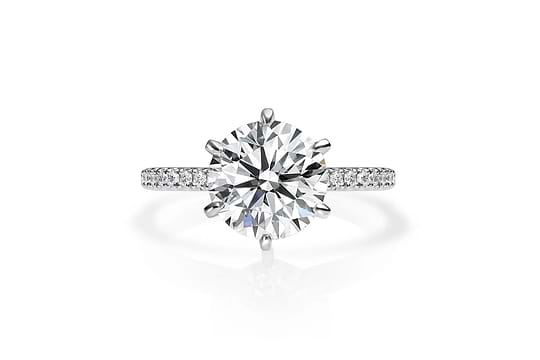
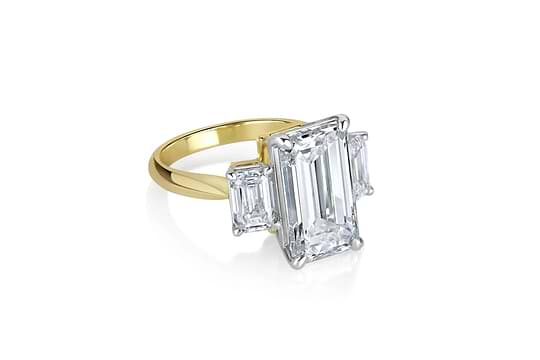
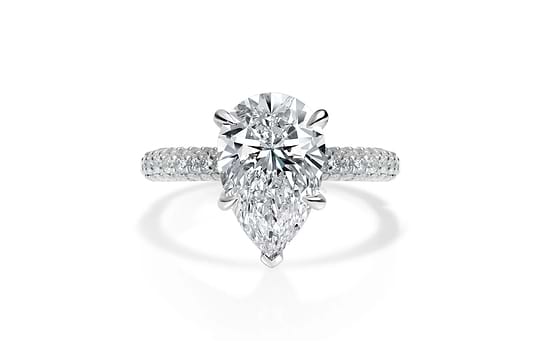
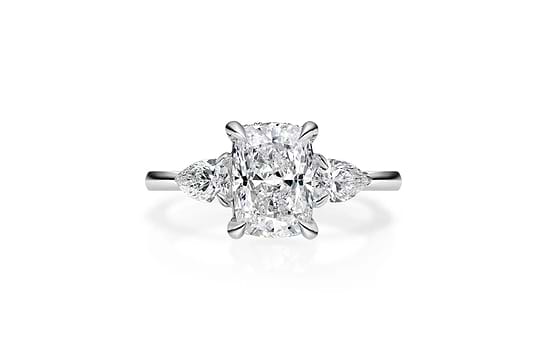
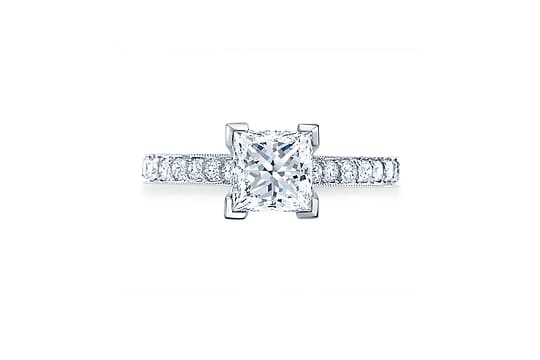
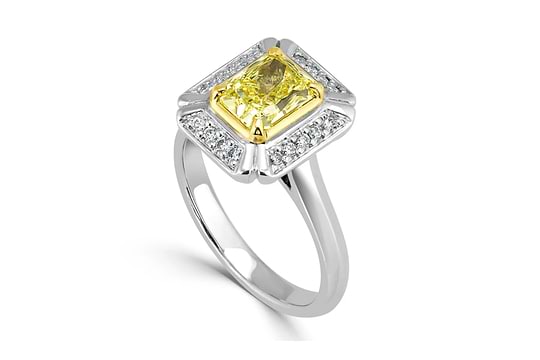
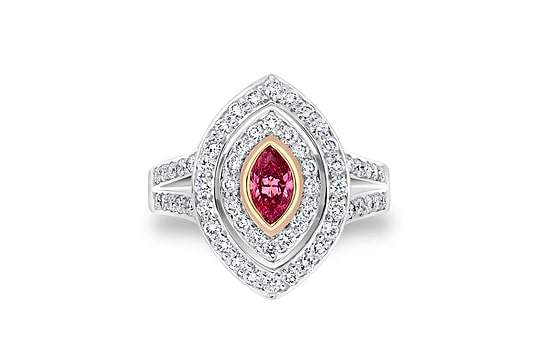
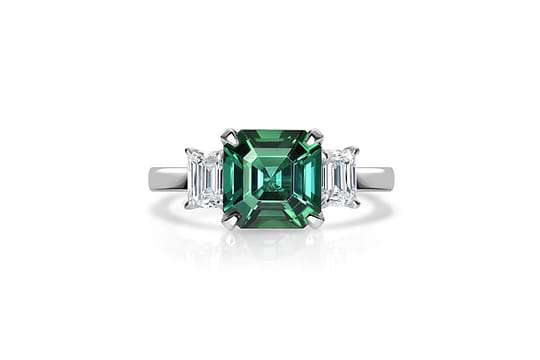
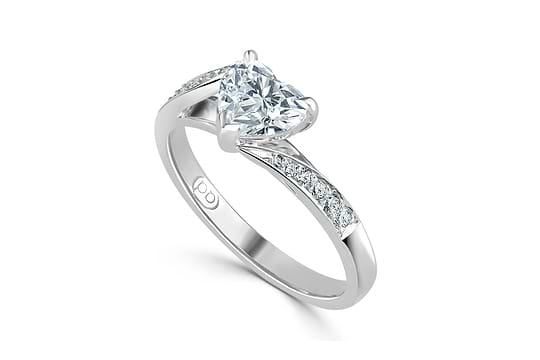
 Certified centre stones
Engagement Rings
Each above 0.30ct with its own GIA report.
Explore ›
Certified centre stones
Engagement Rings
Each above 0.30ct with its own GIA report.
Explore ›
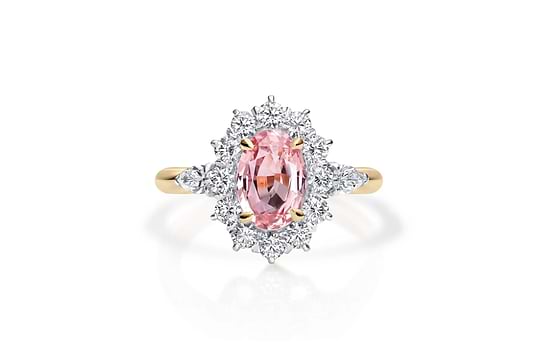
 A second document
Argyle Pink Diamonds
GIA graded, with an Argyle colour code.
Explore ›
A second document
Argyle Pink Diamonds
GIA graded, with an Argyle colour code.
Explore ›
 Melee, verified as a parcel
Tennis Bracelets
Screened in bulk, not reported one by one.
Explore ›
Melee, verified as a parcel
Tennis Bracelets
Screened in bulk, not reported one by one.
Explore ›
 A different report entirely
Precious Gemstones
Identification and origin, not the 4Cs.
Explore ›
A different report entirely
Precious Gemstones
Identification and origin, not the 4Cs.
Explore ›
Every diamond above 0.30 carat in these pieces is GIA graded, and its report comes with it.
Why we insist on GIA
Melbourne · By appointment
Read it with a gemmologist.
Bring the diamond and the report. We will run the lookup together, put the stone under the microscope, and take you through every line — including the ones most people never reach.
No obligation
Bring a stone we did not sell you. We will still read it with you.
Under the scope
You read the girdle inscription yourself.
In Melbourne
By appointment, with a qualified gemmologist.
Questions
Checking a GIA report
The questions we are asked most across the counter. Still unsure about something on your report? Bring it in — no charge, no obligation.
Book a consultationHow do I check a GIA report number?
Is a GIA certificate the same as a GIA report?
How many digits is a GIA report number?
Is GIA Report Check free?
What if my GIA report number is not found?
Where is the GIA number on the diamond?
Can a GIA report be faked?
Does a GIA report tell me what my diamond is worth?
Does a GIA report show whether a diamond is lab-grown?
Are Paul Bram diamonds GIA certified?
Nine mistakes people make checking a diamond report
Trusting the paper because it looks official
A competent forgery reproduces every security feature. The document cannot authenticate itself; thirty seconds at GIA’s database can.
Checking the number but never reading the inscription
The most common of all. A verified number says a diamond like this exists. The girdle says it is this one. Do both.
Reading the grades and skipping the comments
“Clarity grade is based on clouds that are not shown” can mean a stone looks hazy in a way no front-page grade predicts.
Following a verification link the seller provided
Type gia.edu yourself, or use the tool at the top of this page. A link in a listing or an email can point wherever its author chose.
Treating a report as a valuation
GIA does not price diamonds and issues no appraisal. Insurance requires a separate valuation.
Comparing grades across different laboratories
A grade is a judgement made to a standard, and standards differ. Compare like with like, or the comparison means nothing.
Expecting a cut grade on a fancy shape
GIA grades cut on round brilliants only. On an oval or emerald cut, polish and symmetry are what you have.
Reading fluorescence as a fault
It describes behaviour, not quality. Strong blue can make a warmer stone face up whiter. Worth seeing rather than assuming.
Assuming no report means something is wrong
Melee, most stones under about 0.30 carat and many heirlooms were never individually reported. That is ordinary.
Browse the full collection index
Certification & provenance
The reference library behind this page.
Fancy colour & Argyle
Graded on a Coloured Diamond Grading Report, not the D–Z scale.
Rubies, sapphires & emeralds
A Coloured Stone Identification Report, not the 4Cs.
Where a certified stone is set
A report grades the diamond, never the ring around it.
Bands & celebration rings
Set with melee — verified as a parcel, not individually reported.
Earrings, pendants & bracelets
Larger centre stones often carry a GIA Diamond Dossier.
The Paul Bram collections
Every diamond above 0.30 carat in these pieces is GIA graded.
From the journal
Reading the paperwork
Four guides to what a report actually tells you, and what it leaves to your own eyes.
 What Does a GIA Report Number Tell You About a Diamond?How to check a GIA report number free in two minutes, and the second step most buyers skip, because the number alone never proves it is...Read the guide
 GIA Report vs Diamond Valuation, and What the Difference Means for YouOne describes the diamond, the other prices the piece for insurance. Why the valuation figure looks high, who should write it, and why neither is an...Read the guide
 Diamond Clarity Explained, and What Inclusions Actually Mean for Your DiamondClarity is graded at 10x, not at arm's length. Why eye clean is the threshold that matters, and why shape decides how much clarity is worth...Read the guide
 Diamond Colour Grades Explained, and Whether a Higher Grade Always Looks BetterNot always. The metal, the size, the shape and the stones beside it decide what you see, and GIA's own research settles the fluorescence argument.Read the guide